Showing posts with label finance. Show all posts

Wednesday, April 7, 2010

Rowing, Financial Literacy, and Sunglasses

My last couple of entries have been pretty much focused on one topic after a period of writing more than I need to on many topics each week. I switched to just one topic because quite frankly writing a couple of paragraphs about 7 or 8 or more issues each week was pretty freak'n stressful...finding something to write about, then writing it all while trying to actually BE a Balanced Guy with a family, job, hobbies, friends, etc to tend to. But...writing on one topic was kinda boring and so I'm experimenting a bit. This week I'm going for less on each topic but more topics...I think. Of course I recognize the irony of this due to my posting from March 24 in which I extol the virtues of learning about fewer things but in more depth. I'm fishing around to make for the best reading so cut me some slack.
The Competitor - Big sports news this week were the Final Four and Tiger's return (even more so than season opener for MLB). What is that old saying? Something about "Catch a tiger by it's tail"..." Or is it "Tiger catching tail?" Those are the easy stories and no doubt you know the outcomes of them, so I'll go a bit more obscure. Have you ever driven past a body of water and seen those long skinny "speed canoes" (as they were monikered by a rural resident of South Carolina many years ago as we were traveling to Florida for winter training) propelled by people pulling on long, long oars? Of course I'm referring to the sport of rowing, sometimes called crew. It's the oldest collegiate sport in the US, dating back to 1852 and one of the oldest competitive sports in the world with the annual Boat Race between Cambridge and Oxford dating back to 1829. In fact, with some estimates of 120 million world-wide viewers of this race each year, it would be the most viewed single day sporting event in the world. Even if this estimate is a bit inflated, very reliable numbers of 250,000 people standing along the banks of the Thames River watching the 4+ mile race in person make for it to be bigger than just about anything in the US shy of a NASCAR race. And not to burst your bubble but the coxswain (the little person who steers the shell) does not shout "stroke, stroke, stroke...".


 So if you've ever had an inkling of interest in sitting on your butt while going backwards...fast - which by the way is one of the premiere forms of aerobic exercise and calorie burners known to man - take note that June 5, 2010 is National Learn to Row Day. Click on the link to find out where you can learn to row at a club near you. You can also find out what the coxswain actually says.
Oh yeah. For a much better rundown on sports than I can provide, check out my buddy Dave over at The Savage Truth (just bring your dictionary along as he likes to use words like "umbrage").


Your Ride - Those spots of oil in the driveway are telling me that I've got to get underneath the minivan and repair something...but I'm not sure what just yet. Admittedly I'm avoiding it ever so slightly for two reasons: 1) it's messy and will take a good chunk of a day. and 2) while I'm pretty handy around the house, car repair is not my strength. However I'm willing to tackle it, although there will be plenty of praying before, during, and after that I won't, aren't and didn't screw something up in the process. Of course, the prayers will probably be augmented by brief periods of swearing. Should make for an interesting combination. Check out Haynes online for repair manuals for your ride should you want to save a few bucks and DIY.
Greenbacks - From the economic rubble around us, it's pretty apparent that many Americans are financially illiterate. Why is it we teach can high school kids how to calculate differential equations or debate the Middle East peace process but can't seem to provide basic life skills like how to balance a checkbook, assess a car loan or manage monthly bills. Not only this, but a lot of financial stuff out there is either excessively complex (even some of our supposed Wall St Lords of the Universe had trouble making heads or tails of some of the derivatives and other financial instruments proffered by their own firms) or not explained in clear terms. I'll admit that it sometimes takes me a few reads through financial documents to understand them despite the fact that I have an MBA in finance. So how in the world is the average American supposed to understand this stuff when less than 30% of Americans have a 4-year college degree?  Not that a college degree is required to be financially literate or even successful (e.g. Bill Gates) but the odds are not in favor of someone lacking one having at least some basic financial proficiency. Luckily, about 75% of the US population has internet access of some sort (obviously you do since you're reading this). Thus there are resources available to ensure that you AND your kids are financially literate. Take a look at Banking on Our Future as well as Wise Money Choices.

Now...if we can just get the bankers and folks on Wall St to hold up their end of the bargain and do the right thing...
I've also got a couple of books on my reading list: 13 Bankers  by Simon Johnson and The Road From Ruin by Matthew Bishop and Michael Green.


Arguing - The state of political discourse in our country has gotten ridiculous. How the folks in Washington and all over the country spewing venom (both sides) can't see that the majority of Americans are fed up with it is beyond me. If you are tired of the political and economic news being almost universally disheartening (at least as offered to us by the major news outlets), try stopping in at The Good News Network for your daily dose of "Good Things are Happening in the World Today". It may be a bit trite and escapist but it's a nice foil to all the bad, sensationalist, fear-mongering news constantly thrown at us. And the stories aren't sappy stuff about puppies and kittens. Just real news about real people doing real good in the world.


Black Sock and Flip-Flops - Growing up with a father who flew nearly 60 combat missions in Vietnam in an F-4 Phantom left an indelible mark on me. One of those was the sunglasses he wore - Original Pilot Sunglasses by AO Eyewear. The style has been around since 1958 and our men and women in uniform are still wearing it, although the official supplier since 1982 has been Randolph Engineering. It's no wonder they remain popular as, in my opinion, sunglasses don't get any cooler looking. They used to be hard to find but now you can get them through a number of online outlets. Fortunately for me, I got my most recent pair through my uncle, a retired USAF Lt Col. If, like me, you came of age during the Big 80's, you no doubt remember Ray-Ban aviators being worn by Tom Cruise in the 1986 hit movie, Top Gun. They were originally popular after WWII as a result of MacArthur wearing them. I still have my pair bought in 1987 but no longer wear them as they make me look like a deranged bug. These days I go with nothing but my AO's.

And finally, because I do it so often anyway, here's yet another pic of Kim Kardashian.


Thursday, December 31, 2009

New Year's Resolutions...


It's the New Year and the majority of Americans are more-than-happy to leave the old one behind. 2009 was not a great year by any standard. In fact, a majority polled think the 00’s were the worst decade in…well…decades. On the flip side, a majority of Americans (although probably not the same majority!) are hopeful 2010 will be much better - I know I certainly am among them. I think if we all tried to be a little more balanced in our approach to life, avoiding extremes, we wouldn’t have all the craziness that sometimes seems to plague us. Not to say that flirting with limits and sometimes breaking them is not needed; if no one ever did we’d probably still be living in caves. Nor am I promoting never rocking the boat. Ideas need to be pushed, we need to stretch and challenge ourselves mentally and physically, we need to take chances. But a lot of our current quandary is the result of greed and hack reaction. Too much nowadays, people seem unwilling to read the fine print – or even the directions for that matter – to look more deeply in to an issue. We want a 30 second sound bite of everything but no more (and I think even 30 seconds might seem too long for a populace raised in the post-MTV age). I read not long ago that if the Cuban Missile Crisis happened today, the end result would probably be nuclear war instead of a crisis averted. In 1962 JFK had time to think and deliberate without being pressed by the press and Congress for a quick response to the situation. Today, the media juggernaught and politicians’ desire to be the constant center of attention combined with our collective short attention span unfortunately serves only to demand an immediate response from the president to every little blip and hiccup.


I’m not usually one to make New Year’s Resolutions. However, this New Year in trying to be a bit more balanced, I’m going to make my best effort to multi-task less, try learn about fewer things but each in more depth, read the long news story all the way through, and pay attention to the details. In that spirit this installment of The Balanced Guy will be dedicated to trying to help you be a little less crazy, a little less paranoid, a little less scattered, a little less…period. And fair warning – I get up on a bit of a soapbox this time around. 


I recognize the irony in this given that The Balanced Guy blog is about giving you short blurbs of information on a multitude of topics. However, maybe one or two of them will interest you enough to look a little more closely. Won’t you join me?


Greenbacks - In his recent article “Why American Consumers Can’t Add”, Bob Sullivan exposes a less-often-discussed contributing factor to the current economic crises – Americans are generally terrible at math, especially consumer finance. I find math to be a somewhat tricky subject to write about for several reasons.1) I wasn’t a math whiz growing up and had problems with it 2) I’ve actually turned out to be pretty good at doing basic math in my head 3) and I even have an MBA in finance yet still find some components of consumer finance tricky to understand at times. This all leads me to the realization that there are so many branches of mathematics and complex financial instruments that wanting people to have even a basic understanding of it all is almost akin to asking them to perform brain surgery. At the same time, basic financial literacy is something everyone should have. Not to knock my parents but they never taught me how to balance a checkbook, the basics of paying bills or the concept of a mortgage and interest rates let alone the intricacies of investing. I had to figure it out on my own. Which reminds me – I need to start involving my oldest son next time I sit down to pay bills.


Tasty LicksIn his masterful work, Last Child in the Woods, from 2005 (yeah, yeah…so it’s not brand new, it’s still excellent), Richard Louv examines and explores in detail how American society has taken its children out of nature and created a host of problems by doing so. Because I don’t think I could do better, I’m going to simply copy and paste a great and concise review of the book written by Jeanne Hamming that is posted on its Amazon listing.


Unstructured outdoor play was standard for me as a hyperactive child growing up in the rural Midwest. I fondly recall digging forts, climbing trees and catching frogs without concern for kidnappers or West Nile virus. According to newspaper columnist and child advocate Richard Louv, such carefree days are gone for America’s youth. Boys and girls now live a "denatured childhood," Louv writes in Last Child in the Woods. He cites multiple causes for why children spend less time outdoors and why they have less access to nature: our growing addiction to electronic media, the relinquishment of green spaces to development, parents’ exaggerated fears of natural and human predators, and the threat of lawsuits and vandalism that has prompted community officials to forbid access to their land. Drawing on personal experience and the perspectives of urban planners, educators, naturalists and psychologists, Louv links children’s alienation from nature to attention-deficit hyperactivity disorder, stress, depression and anxiety disorders, not to mention childhood obesity. The connections seem tenuous at times, but it is hard not to agree with him based on the acres of anecdotal evidence that he presents. According to Louv, the replacement of open meadows, woods and wetlands by manicured lawns, golf courses and housing developments has led children away from the natural world. What little time they spend outside is on designer playgrounds or fenced yards and is structured, safe and isolating. Such antiseptic spaces provide little opportunity for exploration, imagination or peaceful contemplation. Louv’s idea is not new. Theodore Roosevelt saw a prophylactic dose of nature as a counter to mounting urban malaise in the early 20th century, and others since have expanded on the theme. What Louv adds is a focus on the restorative qualities of nature for children. He recommends that we reacquaint our children and ourselves with nature through hiking, fishing, bird-watching and disorganized, creative play. By doing so, he argues, we may lessen the frequency and severity of emotional and mental ailments and come to recognize the importance of preserving nature. At times Louv seems to conflate physical activity (a game of freeze tag) with nature play (building a tree fort), and it is hard to know which benefits children most. This confusion may be caused by a deficiency in our larger understanding of the role nature plays in a child’s development. At Louv’s prompting, perhaps we will see further inquiry into this matter. In the meantime, parents, educators, therapists and city officials can benefit from taking seriously Louv’s call for a "nature-child reunion."


What I can say is this book struck a chord with me and in the year since reading it, I have made it a priority to send my kids outside to play much more often. We are fortunate to have pretty big back yard that is far from perfectly manicured and even has a small - very small - section of “woods” in the back corner. We’ve only been back in NJ for about 6 months, having moved from Florida where the landscape is utterly man-made, manicured and manufactured – there are no woods in neighborhoods there and it showed in my children’s play when they moved here. At first, they were completely baffled at how to play in a backyard with no toys and I literally had to show them how I used to build cities and roads out of sticks, rocks and dirt. Since then, they’ve come a long way and can now occupy themselves for hours outside. Try this simple test with your kids – send them out without any toys and see if they can figure out how to entertain themselves. If they are having trouble, you know they need more unstructured play time in the great outdoors. Think back on your own childhood – are your fondest memories of playing in that stream behind your house or playing Atari? You know the answer.


WWWD? – Maybe you have, maybe you haven’t heard about “over-parenting” or “helicopter parents”. A recent article in Time is pretty interesting. These are the folks who schedule their kids’ lives 24/7/365, leaving them little time or chance to just be kids, to imagine, to play, to figure things out, to fail at something, to get hurt and to learn to pick themselves up and dust themselves off. I’m not sure how parents got this way, but some failure, pain (physical or emotional), and loss are an important part of the human experience. A good day is all the better for having known a bad one. I don’t know about you but I’ve learned more from failure than I ever did from success. To be sure, success is sweet and a taste of it will drive you to seek more, but the whip-crack pain of failure motivates even more. As parents our job is not to completely shield our children from failure, but to gradually expose them to it so that when they finally go out on their own they aren’t slapped upside the head when things don’t go their way. Speaking of kids’ heads, I was dumbfounded when recently ice skating and nearly half the kids were wearing helmets! What the…? Has it come to this? I recall being 8 years old and taking off for the day into the woods and fields with my BB gun and pocket knife, simply being told “Be home for dinner”.


Giving our children time to be bored, with no planned activities is incredibly important to their development. Boredom is the great crucible where ideas are born (just as long as someone is around to provide some modicum of supervision to ensure no real mayhem erupts or they don’t play video games all day instead). You’d be amazed what some scrap lumber, a hammer and nails can become. Most importantly, boredom enhances creativity. In both academia and the working world, professors and employers are finding that our young adults, while good at performing calculations and other rote tasks, are lacking in the ability to think creatively and problem-solve. No doubt you recall those lazy summer days as a kid spent conjuring up games from what was at hand instead of “playing” with a pre-programmed toy or video game.


Finally, I’ll make a call to abolish “participation trophies” given out at the end of a sports season. When did this become so widespread? I recall as a kid a the YMCA awards presentations when the tops teams got to go up and receive trophies for their success while the less-successful – the losers – sat, applauded the winners, learned to be good losers, went home empty-handed and let the pain of their loss feed their desire to do better. I was at both ends of that situation at different times. I also have a few participation trophies – they’re useless. However, in my box of childhood memories, the medals, awards and trophies from actual victories – those…they mean something despite the time gone by.


Honeydew – I’m learning to hand-cut dovetail joints. Sure I could get a dovetail jig for my router and make them perfectly, lickety-split but the satisfaction (and frustration!) of laying them out, cutting them and making minor adjustments all by hand until it works wouldn’t be there – not to mention the lack of power tool noise. It certainly takes a lot more time but I’m not a professional cabinetmaker under a deadline to complete a piece of furniture for client. However, having high-quality, professional tools makes a huge difference. The first few times I cut dovetails I used an old miter saw I had. It was not an enjoyable process. Then for Christmas I received a Veritas dovetail saw by Lee Valley Tools. Wow…what a difference! While my skill at making a professional looking joint increased only marginally (everything takes practice) the ease of cutting increased exponentially. It tracks straight and seemingly melts its way through wood.


The Wide World – Go for a walk. Seriously, take a hike. And if you want to turn it in to a fascinating experience that can fill an entire afternoon, take along an Audubon Field Guide. If you live anywhere in the Mid-Atlantic states, I highly recommend you buy the National Audubon Society Regional Guide to the Mid-Atlantic States. It’s a great handy reference for most things you’ll encounter along your walk from trees and flowers, to bugs, birds and bears. It’s fun and satisfying to learn the names of the flora and fauna in the world around you; to be able to tell your children that it’s not just a butterfly but an Eastern Tiger Swallowtail and not just a tree but a Yellow Poplar and the tallest tree in eastern forests. Showing your children you have a bit of knowledge and interest in the world around you can only help pique their curiosity and desire to learn as well. Soon they’ll be turning over rocks in the stream, wanting to know what that “bug” is (it’s the burrowing crayfish, Cambarus diogenes) and then soon running up to you with not just wildflowers they picked but White Wood Asters.


Should you want more information, Audubon goes into much, much more detail with separate field guides to butterflies, fish, wildflowers, trees (eastern US), trees (western US), the night sky, weather, rocks, mushrooms, fossils, seashells and most regions of the US along with a host of other topics. They are perfectly sized to toss into a backpack and are durable with a flexible plastic cover and sturdy pages.

Friday, December 11, 2009

Congress, football and George Washington.

OK...no long intros this time around. Let's just get into it....
  1. The Competitor - Sports
  2. Mr. Muscle - Fitness and Health
  3. Your Ride - Cars
  4. Greenbacks - Career/Money/Finance
  5. Toys - Gadgets (i.e. boys toys)
  6. Tasty Licks - Music, Movies, Books and other Entertainment
  7. Arguing - Politics
  8. The Great Outdoors - hunting, camping, extreme sports
  9. WWWD? (What Would Ward Do?...think about it, it'll come to you) - Family
  10. Black Socks & Flip-Flops - Personal Appearance
  11. Honeydew - Home Improvement/Tools
  12. The Wide World - Travel/Vacation
  13. Eye Candy


The Competitor – Sports

You’ve probably heard the news but in case you haven’t, it seems Congress is taking up the issue of the college football BCS. While I’m not a big fan of the current system (I mean c’mon, how can either Texas or Alabama in good conscience lay claim to the title of “National Champion” when at least one other team will finish the season unbeaten? – TCU or Boise St and possibly Cincinnati), I think lawmakers in Washington have bigger issues to deal with. But who knows? Maybe it’s their way of blowing off steam with all of the pressure they’ve been under to right the economy but not too sure what President Washington would think of this...more on him below.


Greenbacks - Career/Money/Finance

While it’s not as though Princeton University is hurting for cash in the way that many Americans are, its endowment took a significant hit over the past year falling nearly 23% between June 2008 and June 2009 to $12.9 billion (I should be so lucky to have such problems) . Considering that almost half of its operating budget comes from its endowment that can put a crimp in its style, especially the style of one of the higher-flying universities in the country.


However, the university reported this past week that its returns for the fiscal quarter ending September 30, 2009 rose a modest 5%. What does this mean to you or me? Well, for starters it’s hopefully yet another sign that both the domestic and world economy is on the mend. You might also be able to take a few lessons from some expert investment professionals who, as caretakers of large sums with a very long-term view, allocate and choose differently than many other investors.


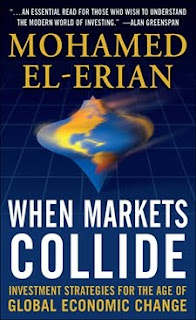
That being said, I’ve just added to my reading list When Markets Collide: Investment Strategies for the Age of Global Economic Change by Mohamed El-Erian (who also happens to have run Harvard’s endowment for a year just prior to the market collapse). It’s won numerous awards, including the 2008 Financial Times and Goldman Sachs Business Book of the Year Award as well as being selected as a 2008 Best Business Book of the Year by The Economist.


Tasty Licks - Music, Movies, Books and other Entertainment

If you’ve got young boys (or even girls) amongst your brood, you might want to check out G.I. Joe: The Rise of Cobra on DVD. While there are certainly better action movies out there, I’d be willing to bet that the majority of the 5-15 year old set will find the 118 minute high-action adventure quite smashing – I know my three guys did. The special effects were great, especially the sequence where the G.I. Joe team is racing through Paris trying to stop the destruction of the Eiffel Tower.


As an adult, the movie was ok (don’t look for any Oscar-worthy performances) and I’m not quite sure it matched my expectations with regard to the G.I Joe I grew up with – the big ones from the 1970’s, not the smaller ones popular in the 1980’s which is the G.I. Joe the movie is based on. And while I’m a big fan of action-adventure, sci-fi and fantasy movies and more than willing to suspend disbelief as needed in terms of technology and/or magic; I have a harder time when movies decide to blatantly ignore the laws of physics – really basic ones at that. Without giving any plot away, let’s just say that if you blow up parts of an ice cap, big chucks of ice are not going to sink and potentially crush whatever is below them – there is a reason the Titanic sank: icebergs float.


Arguing – Politics

While I like to keep The Balanced Guy as politically neutral as possible, I can’t help but recommend you read (and not just listen to) the entire text of President Obama’s Nobel Peace Prize acceptance speech no matter which side of the aisle you align yourself with. While there will always be those at both ends of the political spectrum that will criticize any president no matter what he says, in this case his speech is garnering praise from such Republicans as Sarah Palin and Newt Gingrich. You can find the text in full here.
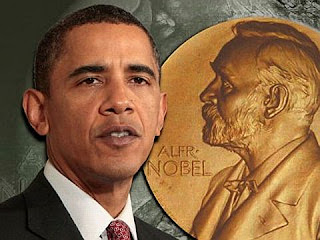

While extolling the virtue of reaching for “the world that ought to be”, he asserts the right of a country to defend itself and aid and assist other nations and people while reminding the world that for the past 60+ years, the United States has kept the peace around the globe. In short, the world would be a much less-secure place today it if hadn’t been for American blood spilled, hard work and justified use of force.


WWWD? (What Would Ward Do?...think about it, it'll come to you) – Family

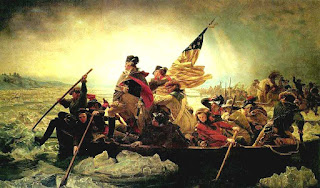
Looking for something a bit off the usual path to do with the family on Christmas Day? If you’re in the NJ/PA area why not try attending the Annual Christmas Day Crossing at Washington Crossing State Park in PA commemorating the 1776 Christmas Day crossing by General George Washington, the Continental Army, and militia. From here, they marched to Trenton where they took the British and Hessians by surprise and captured not only the barracks and city of Trenton but also the imagination of the American people and reinvigorated what had been a failing war.


The reenactment opens (fortunately for us and the actors) at 11 AM with the crossing commencing at 1 PM. This allows the kids to wake up (at 6 AM or sooner no doubt), find that Santa has visited and open their presents before you get them dressed and take a drive to watch the Crossing. Washington and his men were not so lucky as they crossed during the dead of night in a storm – we should feel fortunate they were so committed to the ideals many Americans today unfortunately often take for granted.


Honeydew - Home Improvement/Tools
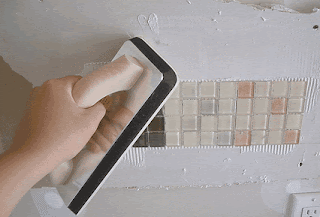
Tiling – Part II. Last time around I discussed installing a tile backsplash in your kitchen between your countertop and cabinets. I took you through installing the tile, cleaning up and grabbing a beer. In the second part I’m going to discuss the really “fun” part – grouting. Now I know you’re thinking to yourself “There’s nothing I’d like to do more on a Friday night than grout tile except maybe read about grouting tile”. So, since you’re looking forward to this, settle back, grab (another) beer and read on.


Your tile is up on the wall (level and flush), the mastic has set, and you’ve cleaned up. Great. Now prepare for one of the biggest messes you’ve ever made in home improvement. Grouting is a messy job, no way around it. While professional tile guys will usually do the job with minimal mess, face it – you’re not a professional tile installer and neither am I despite having installed quite a bit of it. A few pointers before starting: 1) WEAR GLOVES!!! Grout is very caustic, having a fairly high pH level (meaning it’s an alkaline) so it will burn your hands if you don’t protect them – I speak from painful experience…2) Cover your countertops with heavy plastic, butcher paper, cardboard or something else you can tape down and then throw away. Don’t use a tarp or paint drop cloths you want to use some other time.


As I briefly mentioned last time, there are many color choices for grout and the one you pick will significantly impact the finished look of your project so take time to thoroughly investigate your options. Your standard white grout will certainly brighten the look but will also simply look wrong in many cases. A contrasting or brightly-colored grout may look snappy at first, but make sure you can live with it for the long run. Depending on the size of the job, you can sometimes buy grout pre-mixed in tubs but it is much more expensive than grout you mix yourself. There are also usually more color choices in grout you have to mix. Depending on the joint size between your tiles you may want to use either sanded or unsanded grout. There are also varying types of grout such as cementitious and epoxy. I won’t go into the performance differences here but the main one is that the cement-based ones are mixed using water and the epoxy ones with an additive. Finally, I recommend buy a tube or two of matching caulk. Most grout manufacturers make it so be sure to buy from the same company. You’ll use this in places like where the tile meets the bottom edge of the cabinets or after you’ve cleaned up and the grout has set, there will be those small spots where grout is missing.


The tools you’ll need to do the grouting are mainly a rubber float (to spread the grout on the tile), a large bucket to mix the grout in (buy a cheap one you won’t mind throwing away), a source of clean water (assuming you picked a cement-based grout), a mixing paddle, an electric drill (cordless if it’s fairly high voltage, otherwise a plug-in one) and lots of elbow grease. You can mix the grout by hand but I strongly encourage you to buy a paddle to use in your drill – it saves time and energy. I can’t emphasize enough to follow the directions for mixing on the bag/box of grout in terms of quantity of water, time to mix, standing time, etc. Usually you have to add the water, mix the grout, let it stand for a bit, and then mix it some more before applying it. Pay attention to the working time indicated in the directions otherwise you may have a lot of grout that hardens before you can use it (meaning: don’t mix the whole bag at once!) When properly mixed, it should be roughly “mudpie” consistency – not runny but not so firm that you can make a ball out of it. You have to be able to spread it without it falling out of the joints.


OK. Your first batch of grout is mixed. Now what? Using a wide putty knife or trowel, pick some out of the bucket and while holding your rubber float rubber-side up, plop the grout on the float. Bring it to the tile on the wall and in an arcing motion apply it to the wall in a rainbow shape. Keep the leading edge slightly off the wall while applying pressure to the trailing edge to force the grout between the tiles. Don’t worry about following the grout lines; just go right across the tiles. Once you make the initial pass and your float is empty, go back over the area from a variety of directions to ensure the grout is evenly distributed between the tiles.


As the shampoo bottle says “Rinse and repeat”. Not that you need to rinse but keep on repeating. You’ll find that a lot of grout will fall down onto the countertop; feel free to pick it up and keep using it (unless it’s dried out). Before you get too far along, rinse off the float and go back over the just-completed area while pressing very hard. You want to remove any excess grout from the surface of the tile as well as ensure the grout in the joints is set at relatively even widths (you don’t want to look at a grout line between two tiles and see that it gets thicker and thinner as it runs between them). Discard the excess grout that comes off at this point as it’s been too overworked to use elsewhere.


I’ll jump to the end because the rest is simply doing that over and over until it’s done. When you are finished with initially applying the grout you’ll want to go back and, using a fairly damp cloth, wipe down the newly-grouted tile to remove any excess and even out the joints. There is no secret to it other than having a critical eye and your tolerance for (or intolerance of) of imperfection. However since the grout has still not cured don’t wipe too hard! You’re not trying for a final, clean surface at this point, just one that isn’t covered in scads of extra grout.


Now, stand back and look at the utter disaster of a mess you have created and feel proud of yourself…and grab a beer because you’ve got a lot of cleaning to do. While cleaning up, revel in the wisdom of having used a disposable cover on the countertops. Let the grout cure for 24-hours or as indicated on the directions before a final cleaning. Be warned! The final cleaning is not a one-step process as it usually takes 2 or 3 or even 4 cleanings before it looks good. To aid in the cleaning process, buy some grout haze remover and have plenty of old rags on hand. Finally, you’ll want to seal the grout and if you used stone tile, I recommend a sealer/enhancer for the stone not only to prevent it from being stained but it gives it a “wet” look and brings out the natural color and beauty.


Last but not least, reinstall the outlets, light switches and covers (make sure the breaker is turned off first). Do this before using the tube of matching caulk to spot-fill the inevitable holes since you may also find a switch cover or two where the grout just doesn’t quite look right around the edges.

Saturday, November 7, 2009

If you've never had a chance to look at one, a Google Analytics report of the traffic to a web site is pretty interesting, especially the map. Not just any old map this. Starts as a world map showing countries traffic is from; click on a country and you get more detailed. For example, I know that people from NJ, CA and TN have read this blog and even someone from India.

  1. The Competitor - Sports
  2. Mr. Muscle - Fitness and Health
  3. Your Ride- Cars
  4. Greenbacks - Career/Money/Finance
  5. Toys - Gadgets (i.e. boys toys)
  6. Tasty Licks- Music, Movies, Books and other Entertainment
  7. Arguing - Politics
  8. The Great Outdoors - hunting, camping, extreme sports
  9. WWWD? (What Would Ward Do?...think about it, it'll come to you) - Family
  10. Black Socks - Personal Appearance
  11. Honeydew - Home Improvement/Tools
  12. The Wide World - Travel/Vacation
  13. Eye Candy
Mr. Muscle - BMI. Those dreaded three letters indicating how "fat" you supposedly are. What a load of sh*t. Somehow a formula invented more than 150 years ago by Belgian math whiz Adolphe Quetelet has become the method used by many health professionals and even insurance companies to decide if You. Are. Fat. The problem is that it was never intended to be used for individuals but for large groups of people or entire populations to identify trends. Even the National Institute of Health recognizes its limitations -

"
One problem with using BMI as a measurement tool is that very muscular people may fall into the “overweight” category when they are actually healthy and fit."

I find this pseudo-statistic somewhat annoying since at 6'4" and 245 lbs with a BMI of 30, I'm supposedly "obese". In order to not even be overweight, I would have to be under 205 lbs! I'd be a damn scarecrow if I was that thin! As a former competitive athlete who still works out regularly, I'm about as far from obese as you can get. A better measure if you have an athletic build is your percent of body fat. Long story short, be wary if your insurance company wants to use BMI as a way to set life insurance rates.

Greenbacks - Far be it for me to claim to be a financial whiz, let alone a Wall Street "Master of the Universe". Yet it seems that once again - when not too long ago a lot of people were claiming value investing to be a thing of the past, a dried-up investing philospohy, a financial dead end in this new world we find ourselves - it seems that the Oracle of Omaha, Warren Buffett, is once again coming out on top. Granted, he can do a lot of deals few others can...his cost of capital is low...people want to do business with him. But, by my reckoning his philosophy is sound. Seems to me that it's worked for him....to say the least. Geez, he's only the 2nd richest guy in the world and he did it through investing - not computers or oil or real estate. Never quite understand how naysayers can claim value investing is a bunch of crap.

Anyway, if you didn't see it, Mr. Buffett this past week made what he called "...an all-in wager on the economic future of the United States..." by purchasing 77.4% of Burlington Northern railroad for $26.3 billion in cash and stock - that's BILLION with a really, Really, REALLY big "B". Total value of the deal? $34,000,000,000. (I had to check that twice to make sure I actually needed all those zeros). He's betting that as the economy recovers, producers need raw materials and then ship finished goods and as trucking becomes increasingly expensive, railways will see an increase in business, especially Burlington Northern. In recent years they have been modernized and made more efficient despite remaining in many way essentially unchanged in it's 200+ year history. This is a classic Buffett deal - a well-run, simple, unglamorous company in a simple, unglamorous industry that is fairly straightforward and produces steady returns year-in and year-out. Nothing flashy. Yet clearly he thinks it's an "outstanding company at a sensible price" - keeping with his value investing philosophy.


Arguing - Stratfor has a great free article this week about US global strategy the roots of which go back to the Roman Empire. George Friedman makes an astute observation: "In short, enough power to be secure is enough power to threaten others." He doesn't mean that it gives a powerful entity the right to go threaten others, he means simply by having that level of power others feel threatened. From this fact, he then explains American global strategy, which as the proverbial elephant in the room, is not as easy as one might expect. Whether the US wants to or not, we cannot ignore the rest of the world nor can it ignore us. We are simply too big.

This is actually a very, very good read with respect to the bigger picture of how American global strategy is driven in large part by the size of the United States and events since 9/11. It steps back from partisan politics and recasts Bush and Obama more as players on the stage with a script handed to them, much as has been done for centuries to other world leaders.

WWWD? - If you haven't had a chance to check out The Princeton Scoop, I suggest you do! It's a great website/social networking-linked in/twitter-updated site dedicated to informing you about happenings, deals and other goings-on in the Princeton, NJ area. While it's got great family and social events listed, if your significant other is a shopper, she'll be glad to hear about The Scoop as it has special deals only available to Scoop followers. You can find an intimate restaurant for a night out on the town with your girl...and the follow-up benefits are all yours!


The Wide World - "What Exit are you from?" The ubiquitous question you hear when you're from Jersey. If you're from Jersey you know the following to be true, if you're not you may find it quite surprising - the vast majority of NJ is stunningly beautiful. I've traveled quite a bit around the state in the three different times I've lived here and I have a penchant for exploring back roads, so have come across a lot of great, out-of-the way places.

Recently I had a chance to take the drive between Trenton and Phillipsburg along the Delaware River (the western border of the state). You'd be hard-pressed to tell you were only an hour from New York City. Taking Rt 29 north out of Trenton, the trip quickly becomes rural. Not too far out you come to Washington Crossing State Park where General Washington crossed the cy Delaware en route to defeating the Hessian troops at Trenton and turning the tide of the Revolutionary War. Next is Lambertville, well-known for its antiques, restaurants and art galleries. A little further up are Stockton and Frenchtown, both great weekend getaways with your gal.


Once you get north of Frenchtown the road narrows and things get really rural, especially if you stick to the river road (619 between Frenchtown and Milford and 627 north of there). You'll drive right alongside an abandoned railroad track, overgrown with trees, on one side and sheer cliff looming over you on the other. Although it's a two-way road, at some points the road narrows to one lane where it threads its way between the cliffs above and river below. If a car is coming from the opposite direction, small shoulders are provided every few hundred yards to allow one driver to pull over and let the other guy pass. The scenery is great, winding its way along the river, through small hamlets, past old farms, and abandoned buildings. This is definitely not the NJ of Turnpike notariety!